
War Theater
ISRAEL SMASHED THE JESUS STATUE, THEN LIED ABOUT FIXING IT. ITALY FIXED IT.
Audio edition
An Israeli soldier smashed the statue, the IDF claimed it replaced it, and then the village threw the Israeli version out and accepted the Italian one instead.
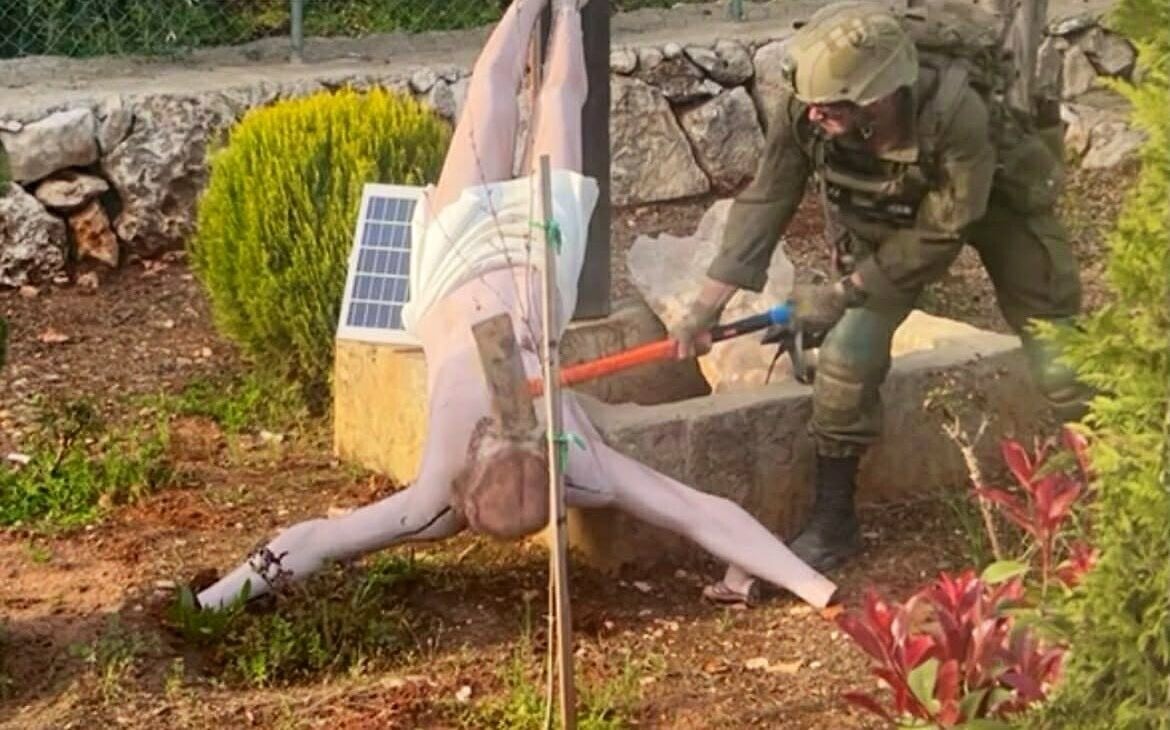
On April 19, an Israeli soldier took a sledgehammer to a statue of Jesus Christ in a Maronite Christian village in southern Lebanon. On April 21, the IDF announced it had replaced the statue. On April 22, the village of Debel threw the Israeli replacement out and accepted one from the Italian contingent of the United Nations peacekeepers instead.
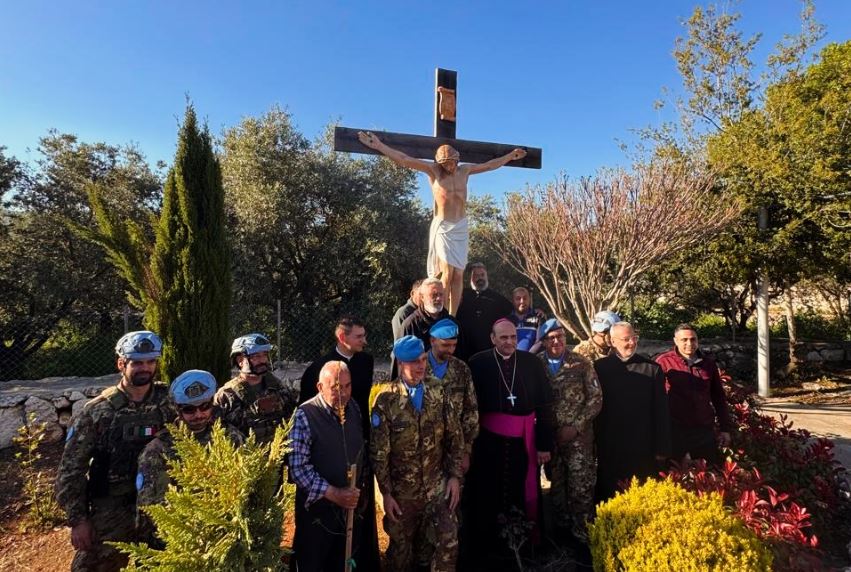
The Vatican’s ambassador showed up to witness the second installation. All three statues exist in photographs. Only one now stands in Debel.
The timeline
The statue is smashed
A photograph spreads of an IDF soldier in uniform swinging a sledgehammer at a statue of Jesus in the garden of a family home in Debel, a Maronite Christian village in southern Lebanon.
The IDF confirms the image is real
IDF spokesperson Lt. Col. Nadav Shoshani says the military will investigate, and by midnight the army confirms the photo is authentic.
Israeli officials condemn the act
Benjamin Netanyahu says he is stunned and saddened, Gideon Sa'ar calls it grave and disgraceful, and Debel officials call it an attack on their sacred beliefs.
The IDF punishes two soldiers
Two soldiers are removed from combat duty and sentenced to 30 days in military detention, while six more who witnessed the act are called in for clarification discussions.
The IDF says it fixed everything
The army posts a photo of a new metal Jesus figure on a fresh cross and says the replacement happened in full coordination with the local community of Debel.
Italy brings the real replacement
Italian UNIFIL forces arrive with a second crucifix, this one closely resembling the destroyed original, and villagers install it with the papal nuncio present.
The side-by-side evidence lands
Lebanese and church-linked reporting publish the three-stage visual record, showing the smashed original, the smaller IDF substitute, and the Italian-backed replica that actually remains in Debel.
What happened
Israel smashed a holy object. Israel announced it had fixed the thing it smashed. The village looked at the Israeli replacement, decided it was not a replacement so much as a receipt, and had it removed. Then the Italians brought the real one.
This is not a mistranslation. This is not a rumor. This is the documented sequence, in photographs, in public statements, and in side-by-side reporting that showed the IDF’s statue and the Italian one were not the same object and did not play the same role.
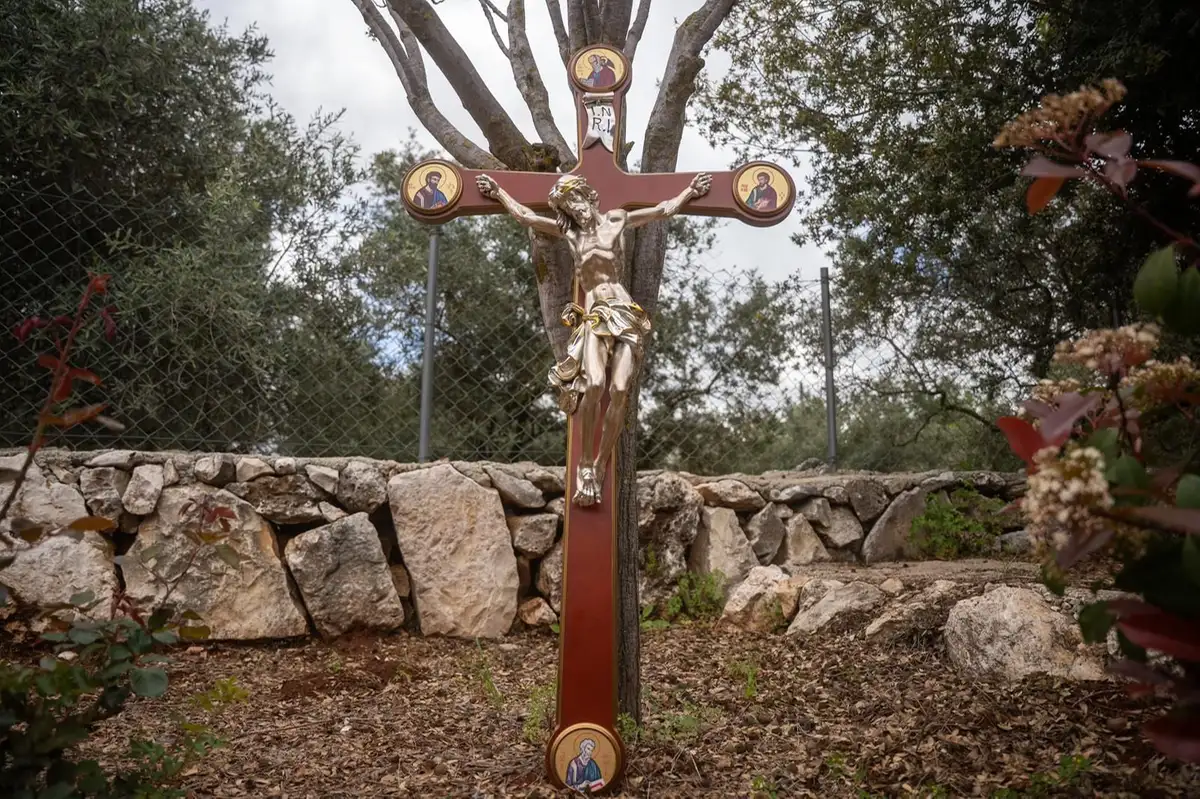
The IDF’s version of the replacement was a small metallic Jesus on a new cross, styled differently from the one destroyed. Imagine a neighbor breaks your grandmother’s china, then returns the next day with a box-store plate set and a press release saying the heirloom has been replaced. That was the diplomatic theory here.
The village did not buy it. The Jerusalem Post eventually put the quiet part on the record: residents reportedly were not interested in a statue given as a gift by the military. That sentence is doing a lot of work. It means the IDF’s “replacement” did not settle the matter. It means the victims did not accept the occupier’s version of restitution.
Why this matters
Debel is not just a random village with a church-shaped accessory package. It is a Maronite Christian village in southern Lebanon, part of one of the oldest continuous Christian communities on Earth. The statue was not décor. It was a visible marker of continuity, belief, place, and family memory.
When the IDF smashed it, the world watched. When the IDF said it had replaced it, the international feed started to move on. When the village quietly rejected that replacement and accepted an Italian-backed one instead, the diplomatic message was obvious: we do not accept restitution from the people who broke it.
That is the part that should have reopened the whole story. It mostly did not. The first press cycle carried the destruction and the IDF’s replacement claim. The correction, the real correction, traveled in narrower channels, lower in the feed, and in outlets fewer English readers ever see. That is how a lie survives now. It does not have to defeat the facts. It just has to arrive first.
What the record shows
The IDF’s own April 21 statement said the damaged statue was replaced by IDF troops “in full coordination with the local community of Debel.” That statement contains two claims doing all the heavy lifting: that the replacement actually settled the matter, and that the village was on board. The events of April 22 and April 23 collapsed both claims.
Times of Israel’s live coverage noted that the Israeli military delivered a replacement statue that was smaller and styled differently from the original, while Lebanese media showed that the UN-delivered version more closely resembled what had been destroyed. Jerusalem Post then reported that local villagers, with help from an Italian UNIFIL battalion, replaced the IDF statue with one identical to the broken one. InfoVaticana credited the Italian forces of UNIFIL with restoring the crucifix and noted the papal nuncio’s presence. Those are not small wording differences. That is a public record trail showing who claimed closure and who actually delivered it.
The unit structure matters too. Two soldiers were punished, one for smashing the statue and one for filming it. Six additional soldiers who witnessed the act and did nothing were called in for clarification discussions. That is not one lone idiot drifting through history like loose shopping-cart evil. That is a squad-sized event with witnesses, participation, and no one stopping it.
Why this changes everything
For the IDF version to be the true one, you have to believe several absurd things at once. You have to believe the statue was replaced in full coordination with the local community. You have to believe the same community then needed a second replacement anyway. You have to believe Italian UNIFIL troops and the Pope’s ambassador just happened to show up for a redundant installation, and that villagers swapped statues for no real reason beyond theater.
Or you can take the simpler reading. The IDF replacement was a public-relations patch with a cross attached. The village accepted the moment it had to, rejected it the moment it could, and let a neutral third party do the job properly. That is not overreading. That is what the sequence looks like when you line the dates up and stop pretending statements outrank photographs.
The media mechanics matter here too. Most English readers saw the smashed statue and then the IDF’s corrective gesture. Far fewer saw the Italian installation, the papal witness, and the village’s effective refusal. The lie held because the correction came later, narrower, and in a different information lane.
The pattern hardens
Damage. Investigation. Limited punishment. Claim of repair. Press cycle closes. Local record says otherwise.
That is the architecture. Not just here. Here it was simply compressed into four days and made unusually visible by the fact that three different statue states were photographed and three different institutional actors left statements behind. That made the trick harder to hide.
In Debel, the IDF gave the world a replacement image and tried to turn that image into the last word. But the last word did not belong to the military. It belonged to the village that removed the Israeli substitute and the Italian contingent that brought something close to the original. The real scandal is not only that the statue was smashed. It is that the public was told the matter had been fixed when the village itself clearly did not agree.
That pattern should sound familiar by now. The announcement is the product. The follow-through is where the truth leaks out. The Western attention span is the delivery mechanism.
What survived
The documents survived. So did the photographs. That is enough.
The original smashing photo was verified by the IDF itself. The IDF’s own April 21 replacement post remains a permanent record of what it wanted the world to believe. The later reporting from Jerusalem Post, Times of Israel, InfoVaticana, and Lebanese outlets preserves the visible contradiction: the IDF brought one statue, the Italians brought another, and the Italian-backed one is the one the village accepted.
Three statue states now sit in the archive. The destroyed one. The Israeli substitute. The Italian restoration. That is the whole story in object form.
And the part likely to last longest is the simplest. The IDF publicly said the replacement happened in full coordination with the local community. The local community then helped remove that replacement and stood beside a different one. That is not an accusation floating in commentary fog. That is just what the record now holds.
History sorts these things out eventually. It just does it slower than a press office lies.
Sources
- Jerusalem Post, “Lebanese town, UNIFIL replace IDF-gifted Jesus statue with replica of crucifix smashed by soldier,” April 23, 2026,
jpost.com/middle-east/article-893926 - Jerusalem Post, “IDF: Image of soldier smashing Jesus statue in southern Lebanon is real,” April 20, 2026
- Times of Israel live blog, “UNIFIL troops replace Jesus statue smashed by IDF soldier in south Lebanon,” April 22, 2026
- Times of Israel, “IDF confirms photo of soldier smashing Jesus statue in Lebanon is genuine,” April 20, 2026
- Times of Israel, “2 troops dismissed, jailed for smashing statue of Jesus in southern Lebanon,” April 21, 2026
- InfoVaticana, “Italian soldiers restore in Lebanon the crucifix desecrated by an Israeli soldier,” April 23, 2026
- Roya News, “Italy sends replacement crucifix to southern Lebanon village after Israeli destruction,” April 22, 2026
- IDF official X account, statement published April 21, 2026, regarding replacement of damaged statue
- Deputy Mayor Maroun Nassif, public comments carried in reporting on April 21, 2026
- Netanyahu public statement on X, April 20, 2026
- Gideon Sa’ar public statement on X, April 20, 2026